From $78 to $150 Million: The 30-Year Story of Optimism Behind “Life is Good”
I first noticed the brand “Life is Good” on a completely ordinary day.
There was no barrage of advertisements, no celebrity endorsements—just a simple T-shirt featuring a smiling stick figure named Jake and a single sentence:
“Life isn’t perfect, Life is good.”
At first, I simply thought it was “simple.” But after learning the story behind it, I realized this wasn’t just an ordinary clothing brand; it was a philosophy of living that grew out of adversity.
I. A Business That Started with $78
The brand’s beginnings could best be described as “tough.”
Founded by two brothers, their initial approach to business was incredibly humble: they drove a van around selling T-shirts—peddling their wares on street corners, at markets, and anywhere else they could pull over.
They had no steady customer base, no brand recognition, and no financial backing.
At their lowest point, they were down to their last $78.
Yet, they didn’t stop.
That detail really resonated with me. It wasn’t the typical “start of a success story,” but rather the state of things right before total failure. The crucial part of the story, however, is that they didn’t give up at that moment.
II. The Birth of Jake and a Simple Yet Powerful Phrase
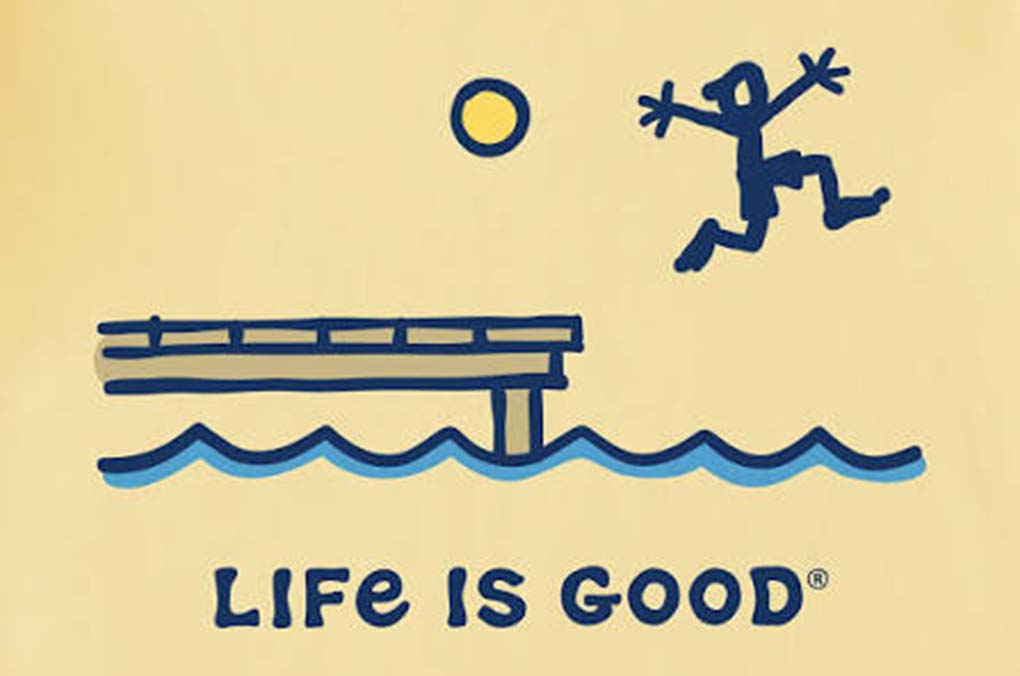
Later, the brand’s iconic image emerged—a smiling stick figure named Jake.
The design was incredibly simple—almost “casual”—featuring basic lines, a relaxed expression, and no complex details.
Yet, it was precisely that simplicity that made it so memorable.
Jake didn’t just represent a character; he represented a state of mind.
And the phrase that would become the brand’s core philosophy—
“Life isn’t perfect, Life is good.”
—wasn’t about empty motivational platitudes; it was about “accepting reality.”
Life isn’t perfect—that’s a fact. But life can still be good—that’s a choice.
This approach set the brand apart from so many others. It didn’t emphasize achieving success or changing one’s destiny; instead, it focused on “mindset.”
III. What Is This Brand Actually Selling?
As I delved deeper into “Life is Good,” I realized something crucial:
This brand has never just sold clothes.
By traditional standards, it fits neither the “fast fashion” category nor that of a luxury brand. While fast fashion sells “speed of change” and luxury brands sell “status symbols,” Life is Good sells something abstract yet very real:
A state of mind.
Its clothing designs are simple—mostly T-shirts, hoodies, and casual wear—devoid of complex, trendy elements or deliberate attempts to chase the latest fads.
Yet, the moment you put the clothes on, they subconsciously shift you into a more relaxed state.
It represents a distinct brand philosophy.
IV. From the Streets to Over 30 Countries
The brand’s growth trajectory is also fascinating.
It didn’t start by entering major shopping malls or capital markets; instead, it began with grassroots street sales, gradually expanding into retail channels before eventually launching its own independent website, lifeisgood.com, to establish a direct-to-consumer model.
Today, the brand sells its products in numerous countries around the world.
Its expansion wasn’t characterized by “explosive growth,” but rather by steady, long-term progress.
This aspect left a deep impression on me.
In an era where many brands chase rapid growth, Life is Good stands as a counter-example: slow, yet consistent.
V. Why Does This Brand Still Resonate Today?
The current consumer landscape is complex, with people bombarded by information every day:
Anxiety, competition, efficiency, standards of success…
Yet, Life is Good conveys a message that moves in the opposite direction.
It doesn’t tell you that you “aren’t good enough”; instead, it reminds you:
You are already capable of living a good life.
This kind of message has become a rarity today.
While most brands push for “better, faster, stronger,” Life is Good champions “more relaxed, simpler, and more authentic.”
VI. Why I’ve Come to See Life is Good in a New Light
When I revisited Life is Good, my focus shifted from “how good the clothes look” to “what the brand is actually trying to convey.”
Its website, products, graphics, and copy all revolve around a single core idea:
Optimism is not a result; it is a choice.
Achieving this kind of consistency is actually quite difficult.
Many brands suffer from a disconnect between their marketing and their products, but Life is Good seamlessly integrates the two.
What you’re buying isn’t just clothing; it’s a philosophy that serves as a constant reminder.
A Story of Long-Term Vision Starting with $78
Looking back at the trajectory of Life is Good, it is not a typical “success story” in the conventional sense.
It is, rather, a story about persistence and mindset:
Two brothers, a van, $78, and an unwavering belief.
Today, when you visit Life is Good, you see more than just an e-commerce site; you see a simple philosophy that has endured for 30 years:
Life isn’t perfect, but it can still be good.


You May Also Like

Exploring Nature’s Bounty: A Trekking Adventure in Chiang Mai!

Kuala Lumpur’s Twin Towers: Unveiling the Breathtaking Cityscape from its Pinnacle!